Most Brands Don’t Have an Awareness Problem. They Have a Personality Problem.


Jordan Stachini
Contents
Visibility vs memorability
Every brand right now wants more visibility.
More reach. More impressions. More followers. More eyes on the business.
And honestly, fair enough. Attention matters. Visibility matters. If nobody knows your brand exists, growth becomes difficult pretty quickly.
But there’s a difference between being seen and being remembered, and that’s the part a lot of businesses still don’t fully understand. Because more people seeing your brand won’t automatically make people care about it, and it definitely won’t fix the fact that most brands feel completely interchangeable.
Businesses often think they have an awareness issue when they actually have a personality issue. They assume the problem is reach, when the real problem is memorability.
Standing out has never been harder. According to Forbes, it is reported that people are exposed to thousands of advertisements every day; consumers are bombarded with marketing messages across digital and traditional channels daily. When audiences are filtering that much information constantly, generic branding disappears almost instantly.
And that’s the issue. Brands are posting every single day that still somehow feel invisible. Not because the algorithm is against them. Not because the market is “too saturated”. Not because people suddenly stopped caring about what they sell.
But because the brand itself feels like it could belong to literally anyone.
Same tone of voice. Same visual identity. Same safe messaging. Same polished corporate personality designed to offend absolutely nobody and excite even fewer people.
And once a brand starts sounding like everybody else in the market, it becomes almost impossible for audiences to emotionally attach themselves to it.
The Obsession With Reach Is Creating Forgettable Brands
A lot of businesses are building brands backwards right now.
They’re obsessing over distribution before they’ve built distinctiveness. Running paid ads before they’ve defined a recognisable tone of voice. Chasing visibility before establishing any kind of emotional identity people can actually connect with.
And in the process, they strip away every bit of personality because they’re terrified somebody might not like it.
Which is ironic really, because the safest brands are usually the easiest to ignore.
The internet doesn’t reward brands for being “nice”. It rewards brands for being memorable. There’s a huge difference between the two.
The brands audiences actually remember tend to have energy. Perspective. Humour. Emotional consistency. They feel like they stand for something beyond generic marketing language and a Canva template.
That’s something we see constantly through branding projects at co&co too. Businesses often focus heavily on how the brand looks before thinking properly about how the brand sounds, behaves or emotionally connects with people online.
And honestly, that’s usually where the disconnect starts. Because branding isn’t just visual anymore. It’s behavioural.
How your business communicates online matters just as much as your logo does now. Your captions, tone of voice, messaging, social content and audience interaction all shape perception in real time, which is why tone of voice has become such an important part of modern brand strategy

The Obsession With Reach Is Creating Forgettable Brands
A lot of businesses are building brands backwards right now.
They’re obsessing over distribution before they’ve built distinctiveness. Running paid ads before they’ve defined a recognisable tone of voice. Chasing visibility before establishing any kind of emotional identity people can actually connect with.
And in the process, they strip away every bit of personality because they’re terrified somebody might not like it.
Which is ironic really, because the safest brands are usually the easiest to ignore.
The internet doesn’t reward brands for being “nice”. It rewards brands for being memorable. There’s a huge difference between the two.
The brands audiences actually remember tend to have energy. Perspective. Humour. Emotional consistency. They feel like they stand for something beyond generic marketing language and a Canva template.
That’s something we see constantly through branding projects at co&co (LINK: https://wearecoandco.com/case-studies) too. Businesses often focus heavily on how the brand looks before thinking properly about how the brand sounds, behaves or emotionally connects with people online. And honestly, that’s usually where the disconnect starts.
Because branding isn’t just visual anymore. It’s behavioural.
How your business communicates online matters just as much as your logo does now. Your captions, tone of voice, messaging, social content and audience interaction all shape perception in real time, which is why tone of voice has become such an important part of modern brand strategy

Competitors, Target Audience & Positioning
So it’s time to look outward – at the people you’re talking to, the players you’re up against, and the space you want to own.
A lot of brands mess this up because of how they treat competitor research. They only look sideways – at the other businesses doing exactly what they’re doing. Big mistake. That’s how you end up just blending in instead of standing out.
We don’t just scan the supermarket shelf for similar labels. We zoom out and look at culture. Because culture shapes how your audience thinks, buys, and behaves – often more than your direct competition does.
Say you’re launching a new coffee brand. The worst thing you can do is just look at other coffee brands. Sure, you’ll spot the standard earthy tones, hipster fonts, and moody latte art, but you’ll miss the bigger picture – the lifestyle cues, the communities, the cultural crossovers. Coffee isn’t just a drink. It’s the 7am survival ritual on the commute. It’s the “let’s grab a coffee” catch-up with a mate you haven’t seen in months. It’s the fuel behind boardroom decisions, late-night study sessions, and first dates that turn into all-day conversations.
If you only study other coffee brands, you’ll miss how coffee weaves into fashion, music, productivity culture, and even self-care trends. That’s where the real opportunities live – because your audience isn’t just buying coffee, they’re buying the moment that coffee lives in. This is key to resonating with your audience.
We dig into:
Your audience – Who are they really? What do they care about? What brands, content, and communities are they already engaging with?
Your competitors – Both direct rivals and the unexpected brands shaping your audience’s tastes.
Your positioning – The gap you can own. The place where your brand sits so clearly in people’s minds that you’re not just another option – you’re the only option.
At co&co, we use this insight to carve out a position that’s bigger than your category, harder to copy, and way more culturally relevant. Because if you only look where everyone else is looking, you’ll only ever end up where they already are. Our advice to any brand is: know what you are, own your sh*t and lean into it.

Successful Case Studies
A winning brand strategy isn’t about copying what’s already out there – that’s where a lot of brand strategies fail. At co&co, we don’t play that game. Sure, it’s tempting to “take inspiration” from the brands you admire, but here’s the blunt truth: if you’re lifting their ideas, it’s not yours. And if it’s not yours, it’s never going to feel authentic.
What you need to focus on is creating a space for yourself and owning it so hard that no one else can touch it. The brands worth learning from aren’t the ones that followed a template. They’re the ones that built something original, consistent, and impossible to ignore. These examples show how smart brand strategy shapes everything a company does – from the way it speaks, to how it shows up in culture, to the experiences it creates.
Here are some brands that have nailed it.
Aldi – Disruptive Without Apologising
Aldi’s brand strategy flipped the supermarket game. Instead of pretending to be “just like” the big players, they leaned into being the budget disruptor with absolute confidence. They don’t want to be like anyone else and consumers rated that.
A tone of voice that hits different
Direct. Cheeky. Unpretentious. Aldi’s not afraid to name names or poke fun at competitors, and they can get away with it because the product delivers – good quality and low prices.
Cheeky stunts that land
Take the Aldi Hash Brown Van. They parked it outside McDonald’s after 11am right after Maccies stopped serving breakfast and handed out free Aldi hash browns. The tagline? “You’ve got to be a clown to limit hash browns to before 11am 🤡.”
It wasn’t just a laugh. It tapped into research showing people want breakfast all day, and positioned Aldi as the brand actually listening. Missed the van? No problem – they reminded customers they could pop into the store and grab them any time. Smart.
Cultural crossover done right
Their “Aldeh” collaboration with Oasis was a temporary rebrand of one of their Manchester stores – a nod to the local accent to celebrate Oasis’s homecoming gig at Heaton Park. It broke category norms, played into local pride, and proved Aldi’s not afraid to step outside the grocery aisle to tap into culture. It's all part of a deliberate brand strategy. And pretty much everyone in a bucket hat stopped for a photo – so you can just imagine how much UGC they got from that.
The takeaway?
Don’t restrict your brand thinking to one category. Aldi’s not just selling food – they’re building a brand that’s self-aware, witty, and impossible to ignore.

Image source: facebook.com
IKEA – Function Meets Feeling
IKEA doesn’t just sell furniture – they sell the idea of a better everyday life. They’ve perfected the sweet spot between affordability and design, wrapping it all in branding that feels friendly, human, and totally doable. But behind the meatballs and flat-packs is a seriously smart brand strategy built on psychology.
Here’s how they do it:
Control the journey
You don’t walk through IKEA – IKEA walks you through it. The store is a carefully designed maze with no shortcuts or obvious exits, meaning you’re exposed to more products (and more temptation) before you ever reach the tills.
Play with price perception
They hit you early with big-ticket items so that when you later see something cheaper, it feels like a steal. This is price anchoring in action – shaping your sense of value without you even noticing.
Make time disappear
No clocks. No windows. Minimal natural light. Endless product displays. You lose track of time, which means you stay longer – and the longer you stay, the more you buy.
Get you invested (literally)
Flat-pack furniture isn’t just a shipping convenience – it’s part of the “IKEA effect.” When you build something yourself, you value it more. Co-creation makes you feel connected to the product, and that attachment drives loyalty.
Use food as a hook
The food court is literally bait. it’s part of a brand strategy that positions IKEA as a full-day experience, not just a place to buy furniture. You’re being primed to buy before you even hit the showroom.
Let people make it theirs
From colours to features, IKEA gives customers the ability to personalise products, turning mass-produced items into something that feels unique.
Keep the experience consistent
Flat-pack instructions, quirky catalogue copy, the layout of the café – it all aligns with their approachable, practical, slightly playful personality.
Adapt with tech
Their 3D modelling app lets you envision furniture in your home before you buy, keeping the brand relevant in a digital-first world.
The takeaway?
IKEA creates an immersive, highly strategic experience that turns shopping into an adventure. It’s consistent, it’s clever, and it’s why customers keep coming back for more (and leaving with lamps and rugs they didn’t plan to buy).

Ryanair – Zero F*cks, Full Strategy
Ryanair is the perfect case of a brand that knows exactly who it is and makes no apologies for it. Love them or hate them, their strategy is bulletproof: be the cheapest, be loud about it, and don’t pretend to be anything else.
Own the villain role
While every other airline tries to be polished and polite, Ryanair leans into being the scrappy, no-frills underdog. Cramped seats? Extra charges? Sh*t customer service? Of course. But they’re also half the price – and that’s the whole point.
Social media with a spine
Their Twitter/X presence is wild – savage clapbacks, meme content, zero polish. But it works because it reflects the brand: blunt, unapologetic, and in your face. They’ve built a digital persona that makes them impossible to ignore.
Consistency is key
From tone of voice to pricing model, everything aligns. They’ve never pretended to be a luxury airline. And because they’re consistent, people trust them to do what they say: get you from A to B for as little as possible.
Marketing on their terms
You won’t see Ryanair kissing media ar*e or dropping millions on polished brand campaigns. Their earned media game is strong, their social is their megaphone, and they use controversy to get people listening.
The takeaway?
Ryanair proves that brand strategy isn’t about being liked – it’s about being clear. When your brand knows exactly what it is, you don’t need to apologise for how you show up.
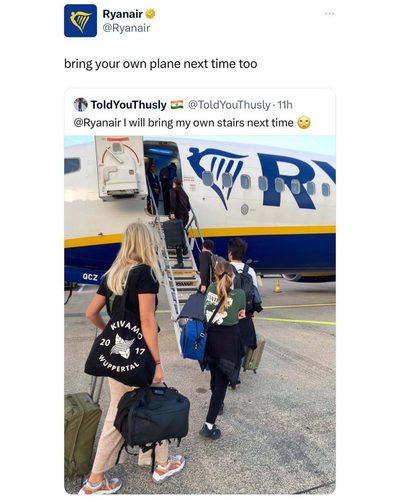
Image source: facebook.com
None of these brands winged it. They knew who they were, where they were going, and how to stay relevant as they grew. That’s what we do for our clients at co&co – help you find your space, own it, and adapt without losing the magic that makes you, you.
Because great brands aren’t lucky. They’re strategic. Need some help in getting yours there? Let’s work together.

Speak to Jordan today
Grab a brew. Have a read
You might also like...