How to create business events people actually want to attend.

Kaysha Davies
Contents
There’s a pretty standard formula for putting on a business event.
Find a venue. Get a few speakers together. Put a panel on. Add some exhibition stands. Provide drinks. Leave a bit of time for networking. Maybe throw in a photo wall if you’re feeling adventurous.
And there’s nothing inherently wrong with any of that.
The problem is that everybody else is doing it too - the evnt formula has become too predictable.
There are conferences, panels, launches, networking evenings, exhibitions and industry events happening constantly. Your audience probably already gets invited to more of them than they could realistically attend.
So simply putting an event on isn’t enough.
You need to give people a reason to actually want to be there.
That’s where a lot of activations and events go wrong. They’re planned around what the brand thinks an event should include rather than what would make the right audience give up a few hours of their day to attend.

Start with why someone would actually come.
Before we think about what an event should look like at co&co, we want to know who needs to be in the room and what those people actually care about.
What interests them beyond their job title? What would make the event feel different from the ten other invitations sitting in their inbox? What could make meeting new people feel easier and more natural? What would they genuinely enjoy doing?
That doesn’t mean forgetting the commercial purpose of the event.
Quite the opposite.
The smartest event concepts find a way to bring what the brand needs to achieve and what the audience actually wants together.
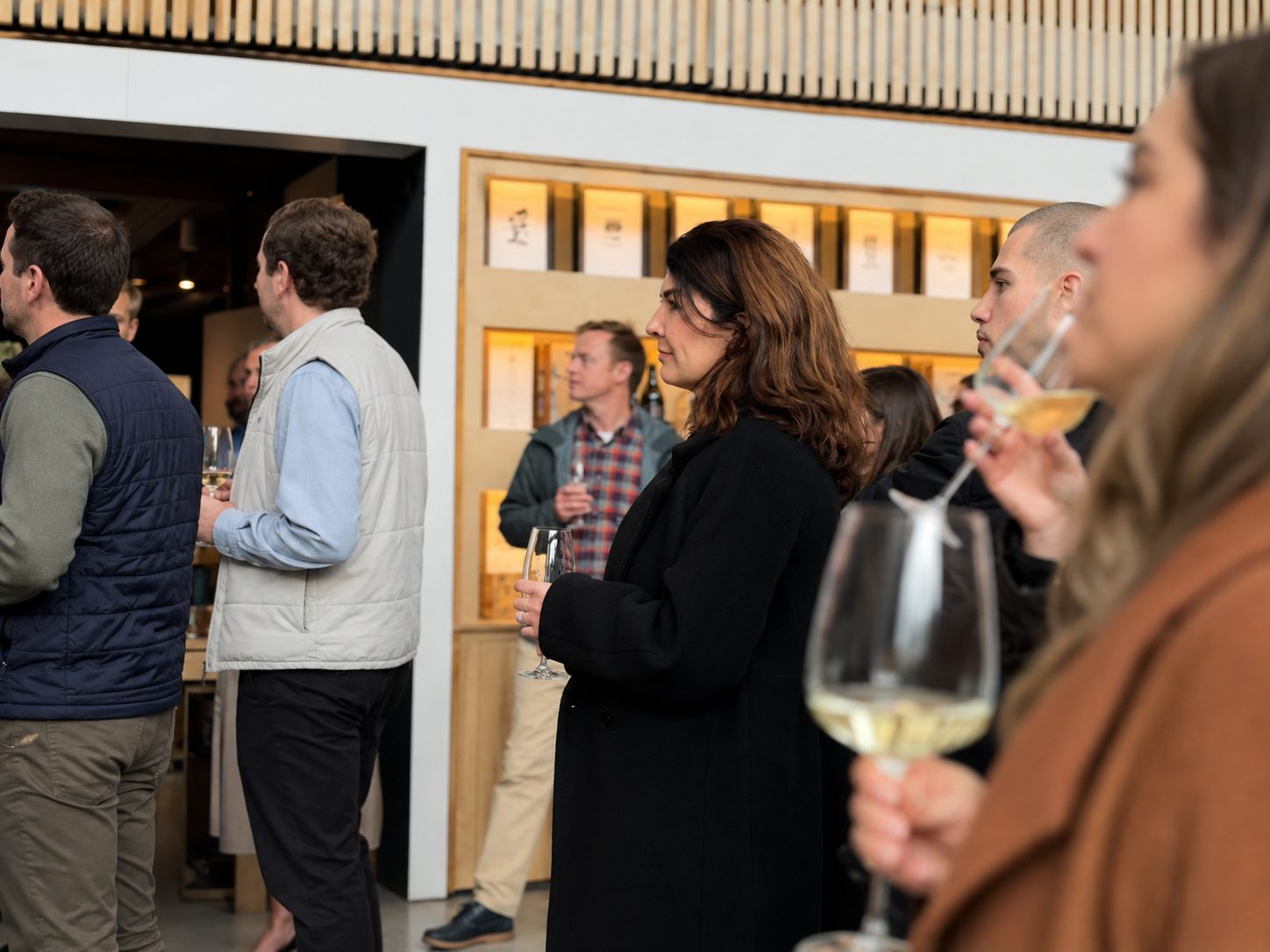
We’ve worked on events where getting the right people in the room was the priority, but rather than expecting the event topic alone to do all the work, we paired the business element with experiences like wine tastings and food tastings.
The people we wanted were still there. The conversations we wanted still happened. The brand still had the opportunity to talk about the thing it needed to talk about.
But attendees also had something they genuinely wanted to take part in.
That changes the whole dynamic.
Rather than walking into another room and being told to network, people are doing something together. Conversation becomes easier. The atmosphere feels less forced. People stay longer because there’s actually something happening that they care about.
The experience becomes the reason to get them through the door.
The business objective is what you strategically build around it.

Your audience is made up of people, not job titles.
This sounds obvious, but B2B marketing forgets it all the time.
Someone might be attending your event because they’re a property developer, investor, marketing director or business owner.
They’re also a person who likes food. Or wine. Or football. Or fitness. Or music. Or design. Or something completely unrelated to their LinkedIn job title.
You don’t have to make every event directly about the thing you’re trying to sell.
Sometimes an adjacent interest gives you a much stronger reason to bring the right group of people together.
That’s why we increasingly look beyond traditional corporate event formats when developing concepts at co&co. We take inspiration from hospitality, community, culture, sport, food and entertainment because those are the things people actively choose to spend their time doing.
The industry conversation can still happen.
It just doesn’t have to be the only thing happening.
And when people are more relaxed, more engaged and actually enjoying themselves, those conversations often become better anyway.

Participation gives people something to remember.
This is also where the difference between attending an event and experiencing one starts to matter.
If somebody arrives, watches three people talk on a stage, has a glass of wine and leaves, what exactly are they supposed to remember a week later?
Maybe one good point from the panel. Maybe somebody they spoke to. Maybe the name of the venue...
The brand itself can easily disappear into the background.
Give people something to participate in and there’s suddenly a much stronger memory attached to the experience.
It doesn’t need to be a huge interactive installation or some expensive piece of event tech. Participation can be incredibly simple.
👉A tasting.
👉A competition.
👉A workshop.
👉Food. Music. Sport.
👉Something collaborative.
👉A shared experience that gives people a natural reason to interact.
The right answer depends entirely on the audience.
That’s the point.
There isn’t one activation format that works for everybody, because different audiences care about different things.
Good experiential strategy works that out before the creative starts.

The experience should still serve the brand.
There is another side to this.
Putting on something people enjoy isn’t enough if nobody understands why your brand was there.
You could host the best wine tasting Manchester has ever seen, but if attendees leave remembering the wine and having absolutely no idea who organised it, you haven’t necessarily created a successful brand activation.
The audience experience and the commercial purpose need to work together.
That might mean creating natural moments for your team to have conversations with attendees. It could mean building the event around a relevant industry topic without making that topic the entire experience. It could involve introducing a product, generating enquiries, changing perception, building relationships or simply getting a specific group of people spending meaningful time with the brand.
At co&co, we always want to know the objective before we decide on the idea.
Because the fun bit needs a purpose.
Otherwise you’re just throwing a party.

We see the same principle in placemaking.
The same thinking applies outside one-off corporate events.
Our work with FOUND is built around giving people genuine reasons to spend time in a place, rather than putting events on simply so the calendar looks busy.
That means thinking about the different audiences FOUND wants to attract, what those people are interested in and what could naturally bring them together.
The result has included everything from food and drink to wellness, community events, local collaborations and wider neighbourhood activity.
The format changes because the audience changes.
But the principle stays the same: don’t start with “we need an event”. Start with “what would make these people want to be here?”
That small shift completely changes what you end up creating.

Bigger budgets won’t fix a weak reason to attend.
This is where brands can also waste a lot of money.
When an event isn’t feeling exciting enough, the instinct is often to make it bigger.
Bigger venue. Bigger staging. More screens. More branding. More production.
All of those things can elevate a genuinely good concept.
None of them create the concept.
The UK business events sector is worth £33.6 billion according to the UK Events Report 2024, so there is serious money being invested into conferences, exhibitions and events every year.
Brands should be asking whether that investment is creating something audiences actually value, not simply something stakeholders will approve.
We love making things look mega at co&co.
But we'd rather spend the budget on something that changes the audience experience than add another giant screen because the room looked a bit empty on the render.

Stop measuring success by how busy the room looked.
Audience-first planning should also change what happens after the event.
A full room is obviously better than an empty one, but attendance alone doesn’t tell you whether the activation worked.
👉Were they the right people?
👉Did they stay?
👉Did they participate?
👉Did people actually speak to the brand?
👉Were useful relationships started?
👉Did attendees share it naturally?
👉Did it create enquiries, leads or future conversations?
👉Would they come to something you hosted again?
The answers depend on why the event existed in the first place.
That’s why we’re big on working out the commercial objective before anything gets planned. If you know what you want the event to achieve, you can build the experience around creating that outcome and actually measure whether it worked afterwards.
A cinematic recap video is nice.
ROI is nicer.

Give people a reason to choose your event.
Events aren’t struggling because people suddenly hate events.
People still go out for dinner. They go to gigs. They book classes. They attend tastings. They watch sport. They travel for experiences. They spend their own money doing things they find interesting all the time.
So if you’re struggling to convince them to attend your activation, exhibition or business event, it’s worth asking whether the problem is really the audience.
Or whether you’ve simply given them another speaker panel, another networking session and another room full of exhibition stands to choose from.
The answer isn’t to get rid of those things completely.
It’s to stop relying on them to be the reason people attend.
Find the audience first. Understand what they care about. Give them a genuine reason to get through the door. Then build the brand and commercial opportunity around that experience.
That’s how we approach activations at co&co.
We create events and experiences around the people you actually need to reach, combining audience insight, creative concepts, brand partnerships, placemaking and delivery with a clear commercial objective from the start.
Because putting an event on is easy.
Creating one the right people actually want to turn up to is the bit that matters.
Got an audience you need to get in the room?

Speak to Jordan today
Grab a brew. Have a read
You might also like...